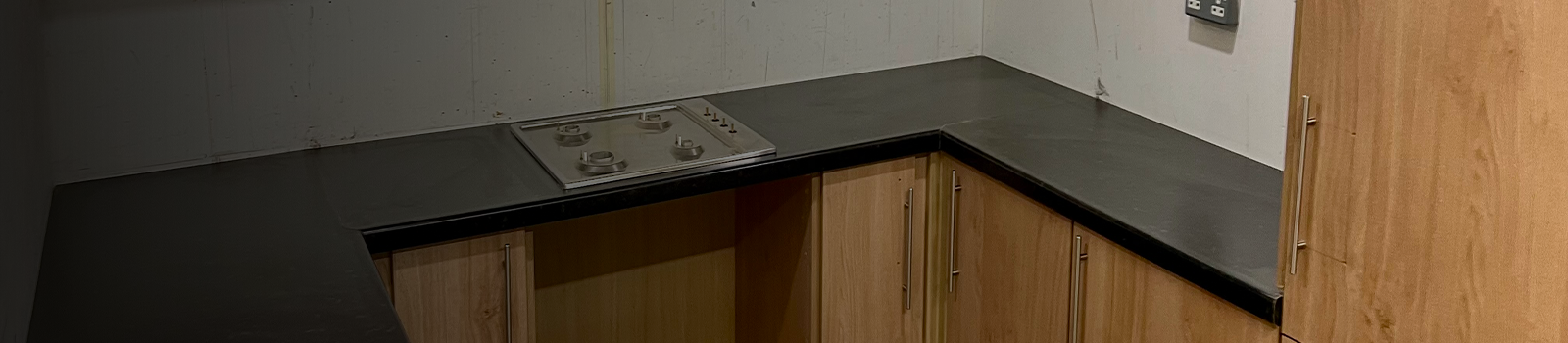
You can learn to install a complete kitchen — units, worktops with joints and cut-outs, panels, doors and finishing trims — in about 8 days of hands-on training. Most kitchen installers also add plumbing, tiling or plastering so they can take on the whole refurbishment.
Kitchen fitting is high-value, precise work, and worktops are where mistakes cost most. These guides are written by our kitchen fitting tutors to help you learn the trade properly and turn it into paid work.
How long does it take to learn kitchen fitting? — what you learn in 8 days, becoming a kitchen installer, and what a fitter doesn't do.
How to become a self-employed kitchen fitter — coming soon
| Course | Length | Price (inc. VAT) |
|---|---|---|
| 8-Day Kitchen Fitting Course | 8 days | £1,150 |
| Level 3 Kitchen Installation Course | 6 weeks (26 days) | £3,000 |
The Level 3 course adds two trades from plumbing, tiling and plastering, and leads to an Ofqual-registered qualification. Eligible service leavers can use ELC funding.
View kitchen fitting coursesNo, the course starts from the basics, though carpentry skills help.
Most learners find worktops the most demanding: measuring, scribing to uneven walls and cutting a clean mitred joint.
No. Gas hobs and cookers must be connected by a Gas Safe registered engineer.
See our plumbing and tiling guides, or our general guides on becoming self-employed.