innr3
  • Home
  • Guides
  • How Much Does a Plastering Course Cost in the UK?

How Much Does a Plastering Course Cost in the UK?

By Mark Tavernor, Plastering Tutor · Last updated: November 2026

A short hands-on plastering course in the UK usually costs a few hundred pounds for a 4–5 day beginner course and over £1,000 for a 9–10 day intensive course. At Construction Skills College in Stoke-on-Trent, a 5-day course is £600 and a 9-day course is £1,150, both including VAT, tools and materials.

The headline price is only part of the picture. Two courses at the same price can give you very different amounts of time on the trowel. This guide explains what you should pay, what should be included, and how to compare courses fairly.

Our plastering course prices

Course Length Price (inc. VAT) Cost per training day Optional certificate
5-Day Plastering Course 5 days £600 £120 City & Guilds Level 1 unit (+£100)
Saturday (4 days) Plastering Course 4 Saturdays £600 £150 City & Guilds Level 1 unit (+£100)
9-Day Plastering Course 9 days £1,150 about £128 AIM Qualifications Level 3 unit or City & Guilds Level 1 unit (+£100)
6-Week Plastering Course 6 weeks Funded by British Gypsum £0 British Gypsum assessed certificate
Skimming Practice Day 1 day £150 £150 None (past learners only)

All prices include tools, materials and post-course support from your tutor by phone, WhatsApp, email or in person.

What should be included in the price?

Before you book any plastering course, check these points. They make a bigger difference to value than the price itself.

  • Time actually plastering. Ask how many hours a day you’ll have a trowel in your hand. Our courses start plastering in the first hour and keep classroom time to a minimum. If the course starts at 9am and finishes at 2pm then you are not getting enough time on the trowel.
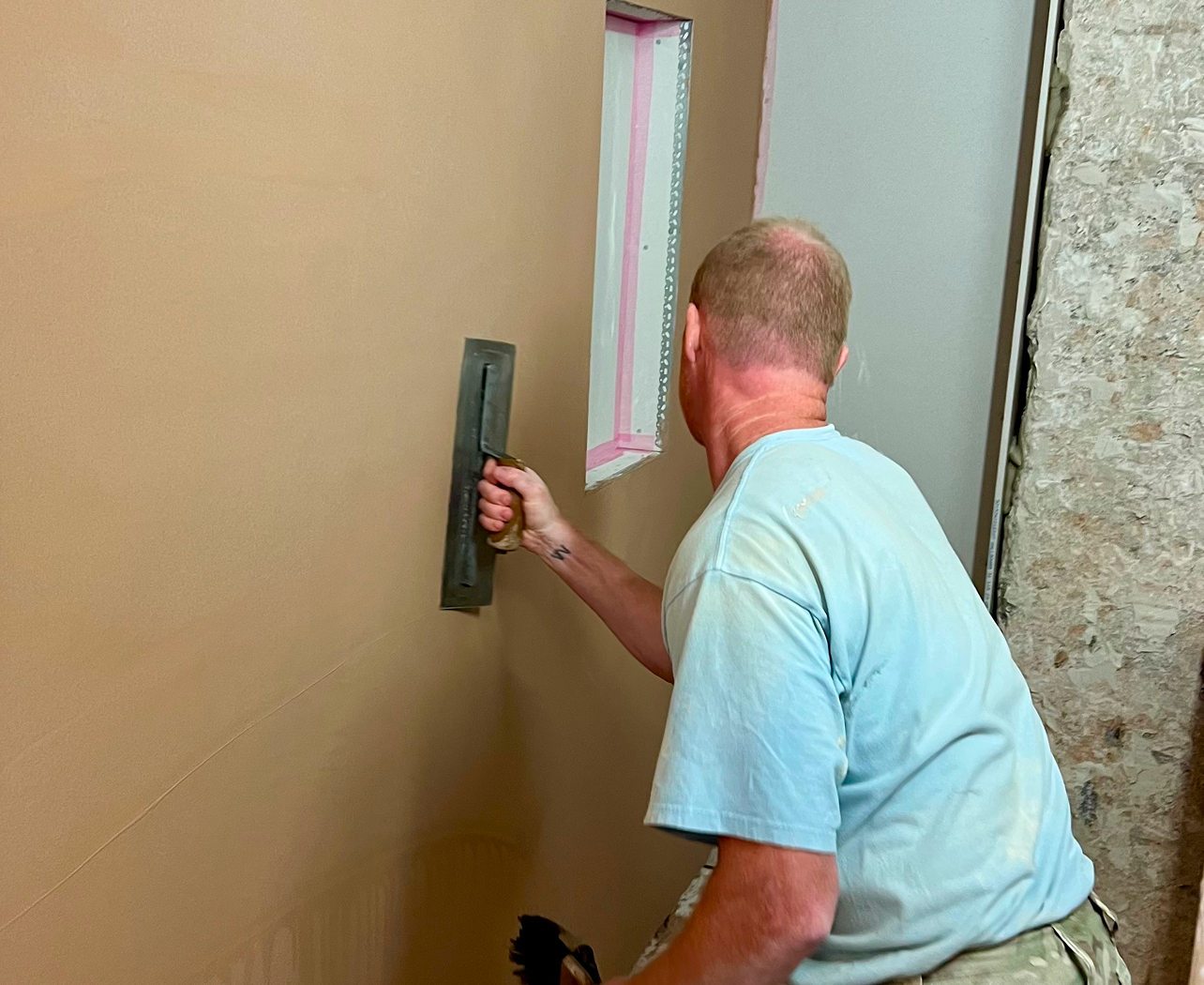
  • Size of the training areas. Skimming a small board is very different from a full wall with a window and a ceiling. Skimming a full plasterboard that does not join any other walls and ceilings is not as good as plastering a larger wall where you have to plaster directly up to the adjoining wall. Ask whether you get your own bay and how big it is. If photos of training bays are on the website ask which bays you use for the course, as some places will show larger bays, but those bays are only used if you are on a longer duration course.
  • Materials. Plaster runs out quickly when you’re learning. Check materials are included and not rationed.
  • Visiting a training centre. It is always advisable to visit a training centre whilst a course is running and if you can, arrange to visit towards the end of a course. If you visit towards the end of a course, you can see the standard reached by everyone on the course.
  • Group size. Our courses are limited to 10 learners.
  • Tutor experience. Ask whether your tutor still works in the trade. Our 9-Day Plastering Course is taught by a plasterer with around 20 years’ experience in the trade and who is still on the tools.
  • Certificate costs. Some providers include a certificate; others charge extra. Our attendance certificate is included and accredited unit certificates are optional.
  • Support afterwards. Help when your first real job doesn’t go to plan is worth a lot. Ours has no time limit and no charge. This support can be used to help you when quoting work, planning work or during the job.

Is a cheaper course a false economy?

Not always. A lower-cost course may be perfectly suitable for DIY, while another may offer bigger practice areas, more complex work or greater tutor input. Ask what you will actually complete yourself, and consider the amount of time spent skimming realistic surfaces alongside the cost.

If you’re unsure, call us on 01782 837007. We’ll talk through what another provider offers and tell you honestly which suits your goals better.

pic2

See our funding page for details.

Can I get funding for a plastering course?

  • British Gypsum funded course: our 6-Week Plastering Course is fully funded. Contact us to check availability.
  • Armed Forces: eligible service leavers and veterans can use Enhanced Learning Credits on our Level 3 multi-trade courses, which can include plastering. See How to use ELCAS credits.
  • Unemployed or on benefits: your Jobcentre Work Coach may be able to fund training through Low Value Provision. Speak to them before booking.
  • Wales: ReAct+ may cover training if you’ve been made redundant.
  • Employer funding: we can invoice your employer directly.

How do I pay?

A £150 deposit secures your place on most plastering courses, with the balance due four weeks before you start. You can pay by card, bank transfer or PayPal, and PayPal Pay in 3 may be available subject to PayPal’s approval.

Frequently asked questions

Is a 5-day or a 9-day course better value?

Per day they cost about the same. Choose the 5-day course for DIY or a first taste of the trade, and the 9-day course if you want boarding, plastering larger areas and more intricate areas and pricing skills for paid work.

Are there hidden extras?

No. Tools, materials and support are included. The only optional extra is an accredited unit certificate.

Do I need to buy tools before the course?

No. We provide everything. Your tutor will advise on what to buy afterwards.

Is accommodation included?

No, but there are hotels, B&Bs and rooms nearby, with rooms from around £125 a week. See Travelling to Stoke-on-Trent for a course.

What our learners say about value

Read more plastering course feedback
WhatsApp